


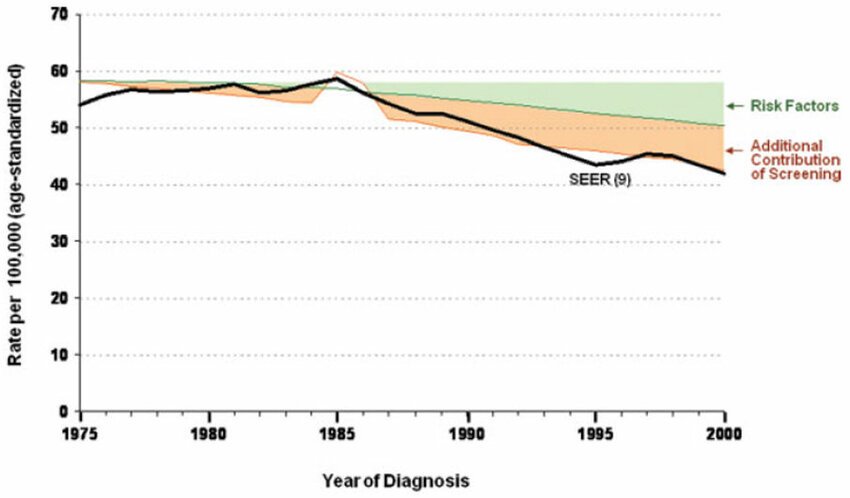
Colorectal cancer is the third most common cancer in the world, with over 1.8 million new cases diagnosed in 2018 alone. It is also the second leading cause of cancer-related deaths, with over 880,000 deaths reported in the same year. However, there is some good news – the rates of colorectal cancer are declining. Thanks to advancements in early detection techniques and increased awareness about the importance of cancer screening.
In this article, we will explore the reasons behind the decline in colorectal cancer rates and the role of early detection in this positive trend.
The Importance of Early Detection
Early detection is crucial in the fight against colorectal cancer. When detected early, the chances of successful treatment and survival are significantly higher. The five-year survival rate for colorectal cancer is 90% when detected at an early stage, compared to only 14% when diagnosed at a later stage.
The Role of Cancer Screening
Cancer screening is the process of looking for cancer in people who have no symptoms. It is an essential tool in the early detection of colorectal cancer. The most common screening method for colorectal cancer is a colonoscopy, which involves examining the entire colon and rectum for any abnormalities or signs of cancer.
Other screening methods include fecal occult blood tests, which look for hidden blood in the stool, and flexible sigmoidoscopy, which examines the lower part of the colon and rectum.
Regular cancer screening is recommended for individuals over the age of 50, or earlier for those with a family history of colorectal cancer or other risk factors.
Declining Colorectal Cancer Rates
The rates of colorectal cancer have been declining in recent years, with a 3% decrease in incidence and a 3.5% decrease in mortality reported between 2008 and 2017. This decline can be attributed to several factors, including advancements in early detection techniques and increased awareness about the importance of cancer screening.
Advancements in Early Detection Techniques
One of the main reasons for the decline in colorectal cancer rates is the development of new and improved early detection techniques. These techniques allow for the detection of cancer at an earlier stage when it is more treatable.
For example, virtual colonoscopy, also known as CT colonography, uses a CT scan to create detailed images of the colon and rectum. This non-invasive procedure is becoming increasingly popular as an alternative to traditional colonoscopy, which can be uncomfortable for some individuals.
Another advancement is the use of artificial intelligence (AI) in cancer screening. AI can analyze medical images and detect abnormalities that may be missed by human observers, leading to earlier detection and improved outcomes.
Increased Awareness and Education

Another factor contributing to the decline in colorectal cancer rates is increased awareness and education about the importance of cancer screening. Organizations such as the American Cancer Society and the Colorectal Cancer Alliance have been working to raise awareness about the disease and the importance of early detection.
Additionally, campaigns such as National Colorectal Cancer Awareness Month in March and National Colon Cancer Awareness Month in November have helped to educate the public about the risk factors, symptoms, and screening options for colorectal cancer.
The Future of Early Detection
While the decline in colorectal cancer rates is a positive trend, there is still more work to be done. The American Cancer Society estimates that there will be over 149,000 new cases of colorectal cancer in 2021, highlighting the need for continued efforts in early detection and prevention.
Improving Access to Screening
One of the main challenges in early detection is ensuring that everyone has access to cancer screening. This is especially important for underserved communities, who may face barriers such as lack of insurance or transportation to screening facilities.
To address this issue, organizations are working to increase access to screening through initiatives such as mobile screening units and partnerships with community health centers.
Advancements in Technology

As technology continues to advance, so do the tools and techniques used in early detection. For example, researchers are exploring the use of blood tests to detect colorectal cancer, which could potentially be a less invasive and more accessible screening option.
Additionally, the use of AI in healthcare is expected to continue to grow. With the potential to improve early detection and diagnosis of colorectal cancer.
Conclusion
Early detection is crucial in the fight against colorectal cancer. Advancements in technology and increased awareness have contributed to a decline in colorectal cancer rates. However, there is still more work to be done to ensure that everyone has access to screening and to continue to improve early detection techniques.
If you are over the age of 50 or have a family history of colorectal cancer. It is important to talk to your doctor about cancer screening options. By detecting colorectal cancer early, we can continue to see a decline in rates and save more lives.
